“Fitness camp” can sound either motivating or mildly terrifying.
For some people, it brings to mind group workouts, hiking, structure, and finally having enough time to focus on getting active. For others, it suggests whistles, punishment burpees, tiny meals, and being shouted at before sunrise.
Modern adult fitness camps cover a much wider range than either stereotype.
Some are genuinely intense. Others are structured but approachable. Some focus heavily on weight loss, while others are more about fitness, healthy routines, outdoor activity, or simply getting people moving again.
The word camp tells you less than you might think.
What matters is how the program actually works: how much of the day is scheduled, how hard the workouts are, whether beginners can keep up, how meals are handled, how much downtime you get, and whether the atmosphere feels encouraging or relentlessly competitive.
That is what this guide is here to sort out.
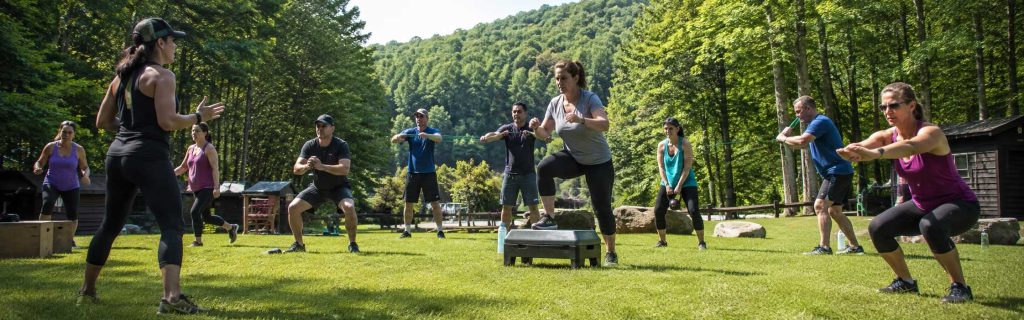
Table of Contents
What Is an Adult Fitness Camp?
An adult fitness camp is a destination-based program built around organized physical activity, usually with more group structure than a typical fitness resort. A stay may include strength training, cardio, hiking, mobility work, healthy meals, coaching, recreation, and scheduled recovery.
The important feature is that fitness is not merely available. It is central to the day.
Some programs feel like residential training camps. Others are closer to active retreats with a camp-style social structure. Programs such as Premier Fitness Camp, Unite Fitness Retreat, Weight Crafters, and Movara all sit somewhere in this structured residential fitness territory, although the intensity, group size, and overall feel differ considerably. The label matters less than the schedule, intensity, and amount of choice you actually have.
For the broader category, see Fitness Retreats. If you specifically want a schedule-driven experience, see Structured Fitness Retreats.
What Does “Camp” Actually Mean Here?
Usually, not bunk beds.
In this category, “camp” mostly means shared structure: you join a group, follow a schedule, exercise together, and spend several days in a routine built around participation.
For some people, that is the appeal. At a resort, skipping the 9:00 AM class is easy. At a fitness camp, the group may already be gathering and the day may be designed to flow from one activity into the next.
That kind of accountability can make it easier to stay engaged without constantly deciding what to do. If you prefer lots of privacy and spontaneous plans, though, it may feel too structured.
The useful question is not whether the word “camp” sounds appealing. It is how much of the day is shared, how much participation is expected, and how much freedom you still have.
Are Adult Fitness Camps Basically Boot Camps?
Sometimes, but not always.
The modern market ranges from approachable, modification-friendly programs to genuinely demanding camps where hard workouts are a major part of the experience.
A boot-camp-style program is more likely to emphasize high intensity, strict schedules, physical challenge, and a “push yourself” culture. Premier Fitness Camp sits closer to the traditional fitness-camp end of that spectrum, while programs such as Weight Crafters and Unite Fitness Retreat use structure and accountability without making a military-style atmosphere the defining feature.
If you want structure without aggressive fitness culture, look beyond the label. Check the actual schedule, pace expectations, workout descriptions, recovery time, and modification options.
A useful rule
Do not judge intensity by the word camp.
Judge it by what people actually do all day.
See [Fitness Retreat vs. Boot Camp].
What Does a Typical Day Look Like?
A moderately structured adult fitness camp might look something like this:
| Time | Activity |
|---|---|
| 7:00 AM | Morning walk, mobility, or stretching |
| 8:00 AM | Breakfast |
| 9:00 AM | Group fitness session |
| 10:30 AM | Strength or conditioning |
| 12:00 PM | Lunch |
| 1:00 PM | Rest, recovery, or free time |
| 2:30 PM | Hike, outdoor activity, or recreation |
| 4:30 PM | Coaching, workshop, or optional class |
| 6:00 PM | Dinner |
| 7:30 PM | Social activity, recovery, or free time |
That general pattern is visible across several structured operators. Premier Fitness Camp tends toward a fuller training schedule, while Unite Fitness Retreat, Weight Crafters and Movara combine organized activity with meals, coaching, recovery, and other parts of the day.
Real schedules can vary widely. Some camps run several demanding sessions per day, while others build the program around moderate movement, instruction, outdoor activity, and plenty of recovery.
The number of workouts alone does not tell you much. Ask how long they last, how hard they are, whether they are mandatory, whether there are different pace groups, and what happens if you need to modify or skip something.
Learn more: Typical Fitness Retreat Schedules and Daily Routines
How Intense Are Adult Fitness Camps?
Anywhere from surprisingly gentle to very demanding.
One camp may work well for someone returning to exercise after years away. Another may revolve around long hikes, repeated training sessions, and a level of fatigue that is part of the experience.
Premier Fitness Camp is a useful example of the more training-heavy side of the category. Weight Crafters and Unite Fitness Retreat sit more naturally in the structured-but-scalable camp model, while Movara adds a strong hiking component to its residential fitness schedule.
A good program should be able to explain its physical expectations in plain language. Look for specifics such as:
- Typical workout duration
- Hiking distance and terrain
- Number of activity blocks per day
- Low-impact alternatives
- Recovery periods
- Whether activities are optional
- Whether different pace or ability groups are used
“Suitable for all fitness levels” is reassuring, but it is not a substitute for details.
Do You Need to Be in Shape Before You Go?
Not necessarily, but choose for the person you are now, not the person you hope to become before check-in.
A camp can be beginner-friendly and still challenging. What matters is whether it can adapt without making modifications feel like an inconvenience.
Good signs include:
- Multiple pace groups
- Scalable workouts
- Low-impact options
- Staff accustomed to mixed ability levels
- Reasonable recovery time
- Clear physical expectations
- No humiliation-based motivation
You want a program that can challenge you without making you feel like you accidentally booked somebody else’s trip.
See also: Can Beginners Go to a Fitness Retreat? | What If I Cannot Keep Up at a Fitness Retreat?
Who Usually Goes to Adult Fitness Camps?
A wider mix of people than the phrase “fitness camp” may suggest.
Guests may include adults returning to exercise, regular exercisers who want a focused week, solo travelers, people seeking accountability, adults over 50, people interested in weight management, and travelers who simply prefer active trips.
The social mix matters almost as much as the workouts. A program may be physically manageable but still feel uncomfortable if nearly everyone else is much younger, much fitter, or there for a completely different reason.
Before booking, ask who typically attends. Age range, fitness level, solo-traveler mix, and group size can tell you a lot about whether you will actually feel comfortable there.
Adult Fitness Camps for People Over 50
Adults over 50 do not need a separate species of exercise. They do benefit from programs that understand recovery, joint tolerance, varied fitness histories, and the fact that age tells you very little about actual ability.
A 63-year-old weekend hiker may be far more comfortable on a steep trail than a sedentary 35-year-old. Another 63-year-old may be returning to exercise after a decade away.
Useful programs accommodate both.
Look for:
- Scalable strength training
- Joint-friendly alternatives
- Reasonable recovery
- Multiple hiking pace options
- Comfortable accommodations
- Staff familiar with mixed-age groups
- A culture that values consistency more than exhaustion
The goal is not to find a camp that treats older adults as fragile. It is to avoid one that assumes everyone recovers like a college athlete.
See [Best Fitness Retreats for Adults Over 50].
What Are the Workouts Usually Like?
Most camps use variety because doing the same hard workout several times a day would get old quickly.
A week might include:
- Strength training
- Circuit workouts
- Walking
- Hiking
- Cardio
- Mobility
- Yoga
- Pool exercise
- Recreation
- Core work
- Balance
- Outdoor conditioning
The mix tells you more than the activity list itself.
A camp centered on hiking, mobility, and moderate strength will feel very different from one built around intervals and conditioning circuits. Ask for a sample week so you can see what guests actually do, not just what the property technically offers.
Are Workouts Mandatory?
Sometimes yes, sometimes no.
Some camps expect guests to participate in most of the program unless there is a good reason not to. Others encourage attendance but leave every decision to you.
If you know you tend to skip workouts whenever nobody is expecting you, stronger structure may help. If you dislike feeling controlled, the same setup may become irritating quickly.
Ask before booking. “Optional” and “technically optional but everyone is expected to be there” are not quite the same experience.
What About Food?
Meals are often more organized than they are at a typical resort, especially when weight management or healthy routines are part of the program.
That might mean fixed meal times, group dining, planned menus, portion-controlled meals, nutrition education, or restaurant-style healthy choices.
The details matter.
Ask:
- Are meals included?
- Are portions fixed?
- Are snacks available?
- Are there choices at each meal?
- Can dietary restrictions be accommodated?
- Are meals communal?
- Can you eat elsewhere?
- Is alcohol available?
For many guests, food is one of the biggest differences between a week that feels supportive and one that feels restrictive.
Learn more: What Do You Eat at a Fitness Retreat?
Are Adult Fitness Camps Just for Weight Loss?
No.
Weight loss has historically been a major part of this market, and some camps still make it central. Hilton Head Health, Skyterra, Movara, and Weight Crafters all overlap with weight-management intent to varying degrees, while programs such as Premier Fitness Camp can be approached more broadly as fitness-focused residential experiences.
That distinction changes the atmosphere.
A weight-loss-focused program may include goal tracking, structured meal plans, nutrition education, or weigh-ins. A general fitness camp may care far more about what you can do than what you weigh.
Neither approach is automatically better. Choose the one that fits why you are going.
See [Weight-Loss Retreats] and [Fitness Retreat vs. Weight-Loss Retreat].
Adult Fitness Camp vs. Structured Fitness Retreat
These categories overlap heavily, and some programs reasonably fit both.
| Adult Fitness Camp | Structured Fitness Retreat | |
|---|---|---|
| Group atmosphere | Usually prominent | Often prominent |
| Scheduled activities | Usually | Usually |
| Fitness emphasis | Very strong | Strong |
| Camp-like feel | More likely | Less necessary |
| Coaching | Varies | Often important |
| Wellness elements | May be secondary | Often more integrated |
| Intensity | Moderate to high, but varies | Low to high |
| Best for | Group activity and fitness focus | Routine, guidance, accountability |
The distinction gets blurry in the real market. Premier Fitness Camp strongly fits the adult-fitness-camp label, while Weight Crafters, Unite Fitness Retreat, Movara, and Skyterra can reasonably be described as structured fitness retreats as well. The categories overlap because the underlying product — a residential stay organized around activity, meals, coaching, and routine — is often similar.
The overlap is large enough that the schedule is still more useful than the label.
Adult Fitness Camp vs. Fitness Resort
This difference is usually clearer.
A fitness resort tends to give you options. A fitness camp tends to give you a program.
| Fitness Camp | Fitness Resort |
|---|---|
| More scheduled | More self-directed |
| Stronger accountability | More personal freedom |
| Group participation is common | Participation is usually optional |
| Fitness is central | Fitness may be one part of the vacation |
| Less decision-making | More choice |
That is why Premier Fitness Camp, Weight Crafters, Unite Fitness Retreat, and Movara belong on one side of this comparison, while broad destination properties such as Canyon Ranch and Red Mountain Resort sit closer to the choose-your-own-schedule resort model.
If you want someone else to create the rhythm of the week, camp may suit you better. If you want excellent facilities and the freedom to improvise, a resort is probably closer to what you want.
See [Fitness Retreat vs. Fitness Resort].
What About the Social Side?
At many fitness camps, you see the same people all day. You work out together, eat together, hike together, and eventually complain about the same hill together.
That can make solo travel surprisingly easy. You do not have to manufacture reasons to talk to people because the program provides them.
Still, some guests want more privacy than others. Ask about group size, communal meals, private rooms, solo-traveler mix, evening activities, and how much downtime you get.
A good program makes connection easy without making solitude awkward.
How Long Should You Stay?
Weekend
Good for trying the concept or taking a short active break.
Five to seven days
Often enough time to experience the full rhythm of the program, meet people, settle into the schedule, and feel genuinely removed from everyday life.
Two weeks or longer
More useful when the program offers progression, varied activities, individualized coaching, or meaningful long-stay structure.
Longer is not automatically better. A schedule that feels exciting for three days may feel repetitive by day ten, so ask what changes for guests staying more than a week.
Read more: How Long Should You Stay at a Fitness Retreat?
How Much Do Adult Fitness Camps Cost?
Prices vary widely because the category includes modest group programs, boutique retreats, premium resorts, and highly personalized experiences.
Your rate may include:
- Accommodation
- Meals
- Group training
- Personal training
- Hiking
- Coaching
- Activities
- Assessments
- Equipment
- Transportation during the program
- Recovery services
Or several of those may cost extra.
The biggest price differences usually come from accommodation quality, location, group size, staff attention, program length, included meals, and overall luxury level.
Compare the whole trip, not just the nightly rate. A cheaper camp with separate charges for meals, activities, transfers, and training can easily overtake a more expensive all-inclusive program.
See How Much Does a Fitness Retreat Cost? and [How to Calculate the Real Cost of a Retreat].
What Should You Ask Before Booking?
The photos can tell you whether the scenery is attractive. They cannot tell you whether you are going to enjoy Tuesday.
Ask:
How many hours per day are scheduled?
Get a real number.
How hard are the workouts?
“Challenging but fun” is marketing language, not a useful answer.
Are activities mandatory?
Know how much choice you actually have.
What happens if you cannot keep up?
Ask about modifications, pace groups, and alternatives.
Who usually attends?
Age range and fitness level can affect the experience.
How large are the groups?
Group size changes both coaching quality and atmosphere.
Are meals included?
And what choices do you have?
How much downtime is there?
Some guests want almost none. Others need several hours.
Are private rooms available?
Do not assume.
What is included in the price?
Separate the program from optional extras.
What does an average day actually look like?
If a camp cannot explain that clearly, you have learned something useful already.
See [Questions to Ask Before Booking a Retreat].
How RetreatFIT Looks at Adult Fitness Camps
The hardest camp is not automatically the best one, and neither is the one with the nicest room.
We look at whether the program fits the people it claims to serve.
Useful factors include:
- Daily structure
- Exercise intensity
- Beginner suitability
- Coaching
- Group size
- Modification options
- Hiking demands
- Recovery
- Meal structure
- Accommodation
- Privacy
- Social atmosphere
- Free time
- Included services
- Total cost
We also pay attention to whether the marketing matches the experience. A program that says “all levels welcome” but shows nothing except extreme workouts and highly athletic guests may still be giving you a useful clue about its culture.
Likewise, a retreat that looks soft and spa-like may turn out to have a surprisingly serious fitness schedule.
The details usually tell you more than the label.
Is an Adult Fitness Camp Right for You?
Picture two versions of the same week.
In one, you stay at a nice resort with a gym, plenty of classes, healthy food, and complete freedom to decide what you do each day.
In the other, you join a group. Breakfast has a time. The first workout is already planned. The afternoon activity is on the schedule. People notice whether you showed up.
If the first sounds better, you may prefer a fitness resort or active vacation.
If the second sounds like the kind of structure you have been missing, an adult fitness camp deserves a serious look.
And if the word “camp” still makes you picture someone screaming while you drag a tire through the mud, ignore the label for a minute. Look at the schedule, the activity level, the people, and how much choice you have.
That is where the real answer is.
Explore Adult Fitness Camps and Related Retreats
- Fitness Retreats
- Structured Fitness Retreats
- [Fitness Boot Camp Retreats]
- [Weight-Loss Camps for Adults]
- [Fitness Retreat vs. Boot Camp]
- Can Beginners Go to a Fitness Retreat?
- [Best Adult Fitness Camps]
- [Best Fitness Retreats for Adults Over 50]
- How Much Does a Fitness Retreat Cost?
- [Questions to Ask Before Booking a Retreat]